
Now accepting NHS & private patients Now accepting NHS & private patients Now accepting NHS & private patients Now accepting NHS & private patients Now accepting NHS & private patients Now accepting NHS & private patients Now accepting NHS & private patients Now accepting NHS & private patients Now accepting NHS & private patients Now accepting NHS & private patients
Care / Precision / Confidence / Glenrothes / Fife /
Treatment
Dental check-ups
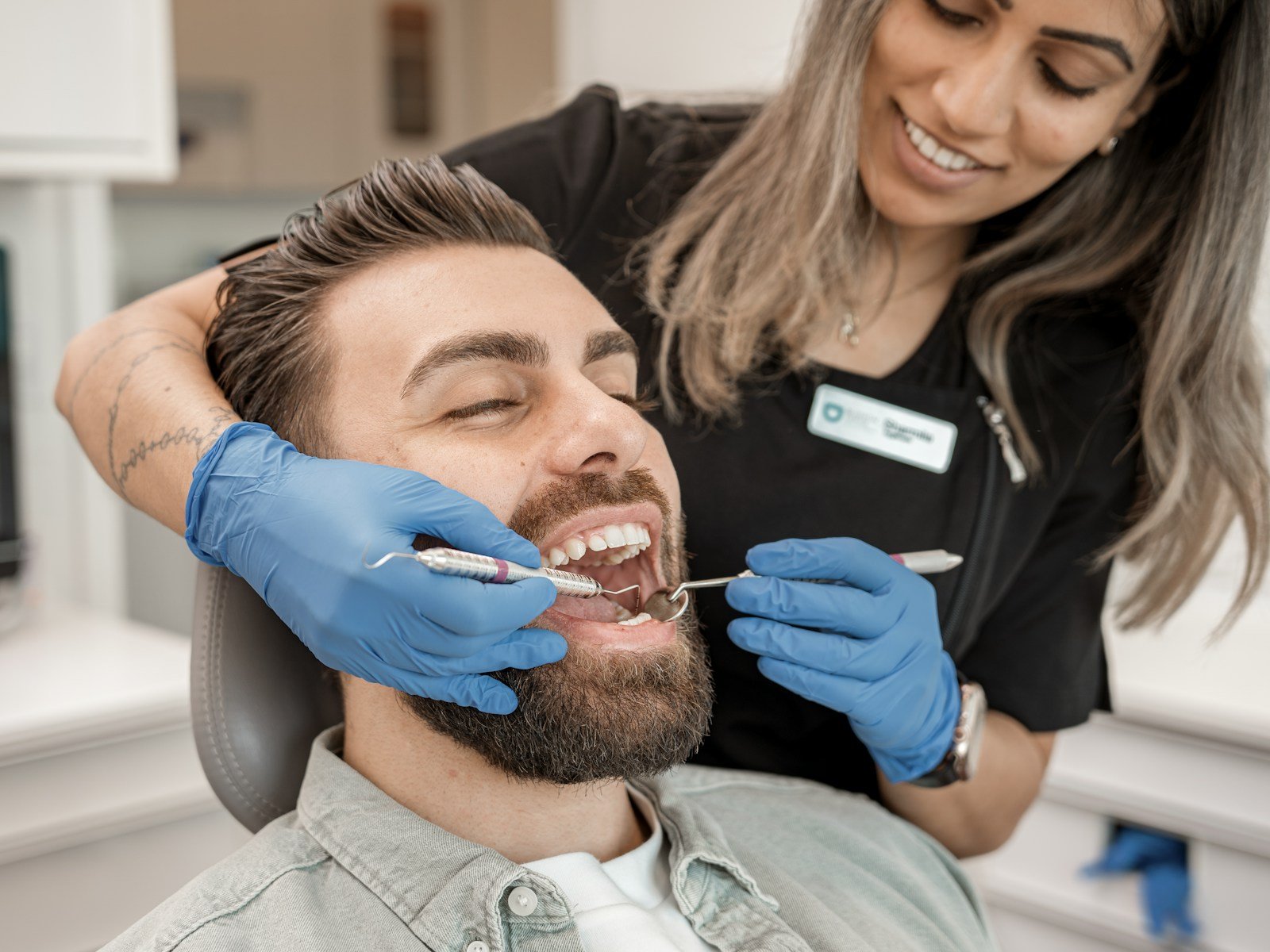
A full look at your teeth, gums and the rest of your mouth, so problems are found early. NHS examinations are free for everyone in Scotland.
What it costs here£45 what that covers
GDHTreatment
01
In short
Dental check-ups in short
A full look at your teeth, your gums and the soft tissues of your mouth.
NHS examinations are free for everyone in Scotland.
Privately, from £45.
How soon you come back depends on your own risk, not on a fixed rule.
Visits
One
How long it takes
Twenty to thirty minutes
Anaesthetic
None
How long it lasts
Until the next examination, usually 3 to 24 months
Can it be undone
Nothing is changed. It is a look, not a treatment.
On the NHS
Free for everyone in Scotland
02
Treatment
What it is
A check-up is an examination of your whole mouth. Not only your teeth. We look at your gums, tongue, cheeks, lips, the floor and roof of your mouth, your throat and the glands in your neck.
The point is to find things while they are small. A patch of decay caught early is a filling. The same tooth left for two years may need a root canal, a crown, or taking out. Gum disease works the same way. It is quiet at the start and does real damage before it is noticed.
Every examination includes a check of the soft tissues for signs of mouth cancer. It takes a minute or two and you may barely notice it happening. It is the part of a check-up most people do not know is there.
At the end you get a plan in writing. What we found, what needs doing, what can be left and watched, what each thing costs, and when you should come back. You take it away and decide in your own time.
03
Treatment
Is this right for me?
A check-up suits almost everyone. That includes people with dentures and people with no teeth left, because the soft tissue check still matters.
If you have not been to a dentist in years, read this bit.
Ten years away is common. So is fifteen. We see it most weeks. People stay away because of cost, because of fear, because one bad appointment years ago put them off, or because life simply got in the way. None of that is unusual and none of it is your fault.
Nobody here will lecture you. Nobody will pull a face at what they see. You do not need to tidy your teeth up before you come, and you do not need to apologise when you sit down. The first visit is a look and a conversation. You can ask us to do nothing else on the day, and that is fine.
A check-up is worth booking soon if:
Your gums bleed when you brush
A tooth has broken or a filling has come out and you have been leaving it
You have an ulcer or a sore patch that has not healed in three weeks
You smoke, vape or drink alcohol regularly, which raises mouth cancer risk
You have diabetes, because gum disease and diabetes each make the other worse
You are pregnant, when gums often react more strongly to plaque
You are thinking about whitening or straightening, which need a healthy mouth first
A routine check-up is not the right appointment if you are in pain today. Ask for an emergency examination instead. It is quicker, it is focused on the tooth that hurts, and it starts at £10.
Doing nothing is also a real option. If your mouth is healthy, you clean it well and you have little history of decay, going twelve to twenty-four months between visits is reasonable. Waiting years and hoping is a different thing. Problems found late cost more, hurt more and take more teeth.
04
Treatment
What happens, step by step
A routine check-up takes about twenty minutes. A first visit takes longer, usually thirty to forty minutes, because we are starting from nothing.
We talk first. Your medical history, any medicines you take, anything you have noticed yourself, and how you feel about being here. Tell us if you are nervous. It changes how we work, not whether we work.
We check the soft tissues. Lips, cheeks, tongue, under the tongue, the floor and roof of the mouth, the back of the throat, and the glands in your neck. We are looking for ulcers that have not healed, red or white patches, and lumps.
We check each tooth. A mirror and a blunt probe, tooth by tooth, looking for decay, cracks, wear, and old fillings or crowns that are failing.
We check the gums. A thin probe with a ball on the end is run gently around each tooth to measure the gap between gum and tooth. Bleeding and depth tell us whether there is gum disease. This is called a basic periodontal examination.
We take X-rays if there is a reason to. Small films between the back teeth show decay hiding between teeth, and how much bone is holding them in. Not every visit needs them.
Then we sit and talk it through. We tell you what we found in plain words, what needs doing now, what can be watched, and what each option costs. It goes in writing before you leave.
We will not start treatment at a check-up without agreeing it with you first. If something needs doing, it is booked for another day unless you ask otherwise and there is time.
05
Treatment
What it costs
NHS examinations are free for everyone in Scotland. Every age, every income, no exceptions. That has applied since 1 November 2025 and it is set by the Scottish Government, not by us. If you take one thing from this page, take that.
Private prices here:
Routine check-up: from £45
New patient consultation: from £45
That covers the examination itself, the soft tissue and mouth cancer check, the gum assessment, any X-rays we need to take on the day, and the written plan with prices on it.
If you do need treatment, NHS charges are set by the Scottish Government and are the same at every NHS practice in Scotland. Patients who pay, pay 80% of the cost of each item, up to a limit of £384 for a course of treatment.
Around four in ten patients pay nothing at all. That includes everyone under 26, anyone pregnant or within twelve months of giving birth, and anyone with a benefits or low-income exemption certificate.
Cleaning is a separate appointment. Professional hygiene care starts at £75. A check-up tells you whether you would benefit from it. It does not include it.
06
Treatment
What could go wrong
A check-up is a look, not a procedure, so the physical risk is small. The honest downsides are these, and one of them is the reason to come.
The bigger risk is not having one. Decay and gum disease do not hurt in the early stages. By the time a tooth aches, the simple options have often gone. Bone lost to gum disease does not grow back.
X-rays use a small dose of radiation. A few dental films give roughly the same dose as a few days of the natural background radiation you are exposed to anyway. That is low, but it is not zero, which is why we take them when there is a reason rather than by habit. Tell us if you are pregnant.
We may find something you did not want to know about. People come in for a look and leave with a plan for several fillings, or with the news that a tooth cannot be saved. That lands hard. It is still better than hearing it in six months, when there are fewer options left.
No examination finds everything. Decay hides between teeth and under old fillings. Cracks can be invisible. Early mouth cancer can look like an ordinary sore patch. X-rays cut the number of misses. Nothing removes them.
The gum check can be uncomfortable. If your gums are already inflamed, the probe will make them bleed and it can sting. It settles within a day. Tell us and we will go more slowly.
A plan is a snapshot of one day. A tooth we agreed to watch can break next month. Come back if something changes rather than waiting for your recall date.
Dentists can disagree with each other. Two dentists can look at the same early cavity, and one will fill it while the other watches it. Neither is being dishonest. Ask us why we are suggesting something and what happens if you wait. If you are unsure, asking for a second opinion is a fair thing to do and we will not take it badly.
07
Treatment
Who does this here
Principal dentist
Registered name
Tien-Yu Chang
GDC number
296929
Qualification
Grado en Odontología, University CEU San Pablo, 2021
Qualified in
Spain
Associate dentist
Registered name
Li Yang Yeh
GDC number
306420
Qualification
Grado en Odontología, University CEU San Pablo, 2021
Qualified in
Spain
Associate dentist
GDC number
329275
Qualification
Grado en Odontología, University CEU San Pablo, 2025
Qualified in
Spain
Associate dentist
Registered name
Chen Liu
GDC number
331071
Qualification
Dr Med Dent, Semmelweis University, 2025
Qualified in
Hungary
Associate dentist
Registered name
Cheng-Tsung Hsu
GDC number
320342
Qualification
Grado en Odontología, CEU Cardenal Herrera University, 2024
Qualified in
Spain
08
Useful answers
Questions people ask
01I have not been to a dentist in years. Will you tell me off?
No. It is far more common than you think, and it is not something we comment on. Our job is to tell you where your mouth is now and what your options are, not to grade your past.
Feeling ashamed is what keeps people away for another decade, and that is the real harm. You are welcome to ask us to look and explain, and to book nothing at all on the day.
02Are check-ups really free on the NHS in Scotland?
Yes. NHS examinations are free for everyone in Scotland, whatever your age and whatever you earn. This is set by the Scottish Government.
Treatment after the examination is not always free. Patients who pay, pay 80% of the cost of each item, capped at £384 for a course of treatment. Around four in ten patients pay nothing.
03How often should I come?
It varies more than most people expect. The right gap is somewhere between three and twenty-four months. Six months is a habit, not a rule.
Shorter gaps suit people with a history of decay or gum disease, people who smoke, people with a dry mouth, and people with diabetes. Longer gaps suit people whose mouths have been stable for years. We agree your interval with you and write it on your plan.
04Will I need X-rays every time?
No. We usually take them at a first visit, because we have nothing to compare against. After that it depends on your risk. Some people need them every year, others can go two years or more.
We will tell you why we want them before we take them. You can say no, and we will tell you plainly what we might miss without them.
05What is the mouth cancer check?
We look at and feel the soft tissues of your mouth, throat and neck. We are looking for ulcers that have not healed within three weeks, red or white patches, and lumps. It takes a minute or two.
If we find something we are not sure about, we refer you to the hospital for a proper look. Most referrals turn out to be nothing serious. Found early, mouth cancer is far more treatable than it is when found late. Do not wait for your check-up if you have a sore that will not heal.
06Will it hurt?
The examination itself should not. It is a mirror and a blunt probe, and nothing is pushed into a tooth.
The gum check can be tender if your gums are inflamed, and they may bleed. That is a sign of gum disease rather than of rough handling. Tell us if you are anxious and we will explain as we go and stop when you raise a hand.
07Are children’s check-ups free?
Yes. Examinations are free for everyone in Scotland, and NHS dental treatment is free for everyone under 26.
It is worth bringing children before anything is wrong. A first visit where nothing needs doing makes the chair an ordinary place, which makes the visit that does need something much easier.
08If you find something, do I have to have it done straight away?
No. You leave with a written plan and prices, and you decide in your own time. Nothing starts until you agree to it.
If something is genuinely urgent, such as a spreading infection, we will say so clearly and explain what happens if it waits. Everything else is your call and your timing.
09What is the difference between a check-up and a hygiene appointment?
A check-up is the examination and the plan. It starts at £45 privately and is free on the NHS.
A hygiene appointment is the cleaning. It starts at £75, takes longer, and removes the hardened plaque (tartar) that brushing cannot shift. Many people need both, but they are two different appointments.
10I am frightened of the dentist. Can I still come?
Yes, and please say so when you book. It is one of the most useful things you can tell us, because it changes how the appointment is run.
You can ask us to explain everything before we do it, to stop whenever you raise a hand, or simply to talk first and look second. Being frightened of dental treatment is common and we are used to it.
09
Treatment
Next step
If it has been a while, book a check-up. You do not need to prepare anything, fix anything or clean anything up first. Come as you are and let us have a look.
Call us to arrange it. Say on the phone if you are nervous, or if it has been years since your last visit. It helps us give you the right appointment and the right amount of time.
If you are in pain today, tell us that when you call. We keep appointments free each day for people who need seeing quickly.
Or call us on 01592 348674 if you would rather talk it through first.
Keep exploring
Helpful next pages.
01
Local guideYour local dentist in Glenrothes
02
TreatmentDental implants in Glenrothes & Fife
03
TreatmentUrgent dental care in Glenrothes
Here in Glenrothes
Ready for a clearer next step?
Contact reception about registration, current appointment availability or the right first visit for your concern.
Glenrothes Dental House2 Huntsmans Court
Glenrothes, Fife
KY7 6SX
Glenrothes, Fife
KY7 6SX