
Now accepting NHS & private patients Now accepting NHS & private patients Now accepting NHS & private patients Now accepting NHS & private patients Now accepting NHS & private patients Now accepting NHS & private patients Now accepting NHS & private patients Now accepting NHS & private patients Now accepting NHS & private patients Now accepting NHS & private patients
Care / Precision / Confidence / Glenrothes / Fife /
Treatment
Fillings
Repairing a tooth damaged by decay, so it works properly again and the hole cannot get any bigger.
What it costs hereFrom £150 what that covers
GDHTreatment
01
In short
Fillings in short
Repairing a tooth damaged by decay so the hole cannot get any bigger.
From £150 small or medium, £195 large, £495 for an inlay or onlay.
The decay has to come out, so the tooth ends up smaller than it was.
A filling does not last for ever. Most need replacing at some point.
Visits
Usually one
How long it takes
Twenty to sixty minutes
Anaesthetic
Local, in most cases
How long it lasts
Around five to ten years
Can it be undone
No. Decay taken out does not grow back.
On the NHS
Available on the NHS
02
Treatment
What it is
Tooth decay (caries) is damage done by bacteria that live in everyone’s mouth. They feed on sugar and make acid. The acid softens the hard outer shell of the tooth. Given long enough, it makes a hole.
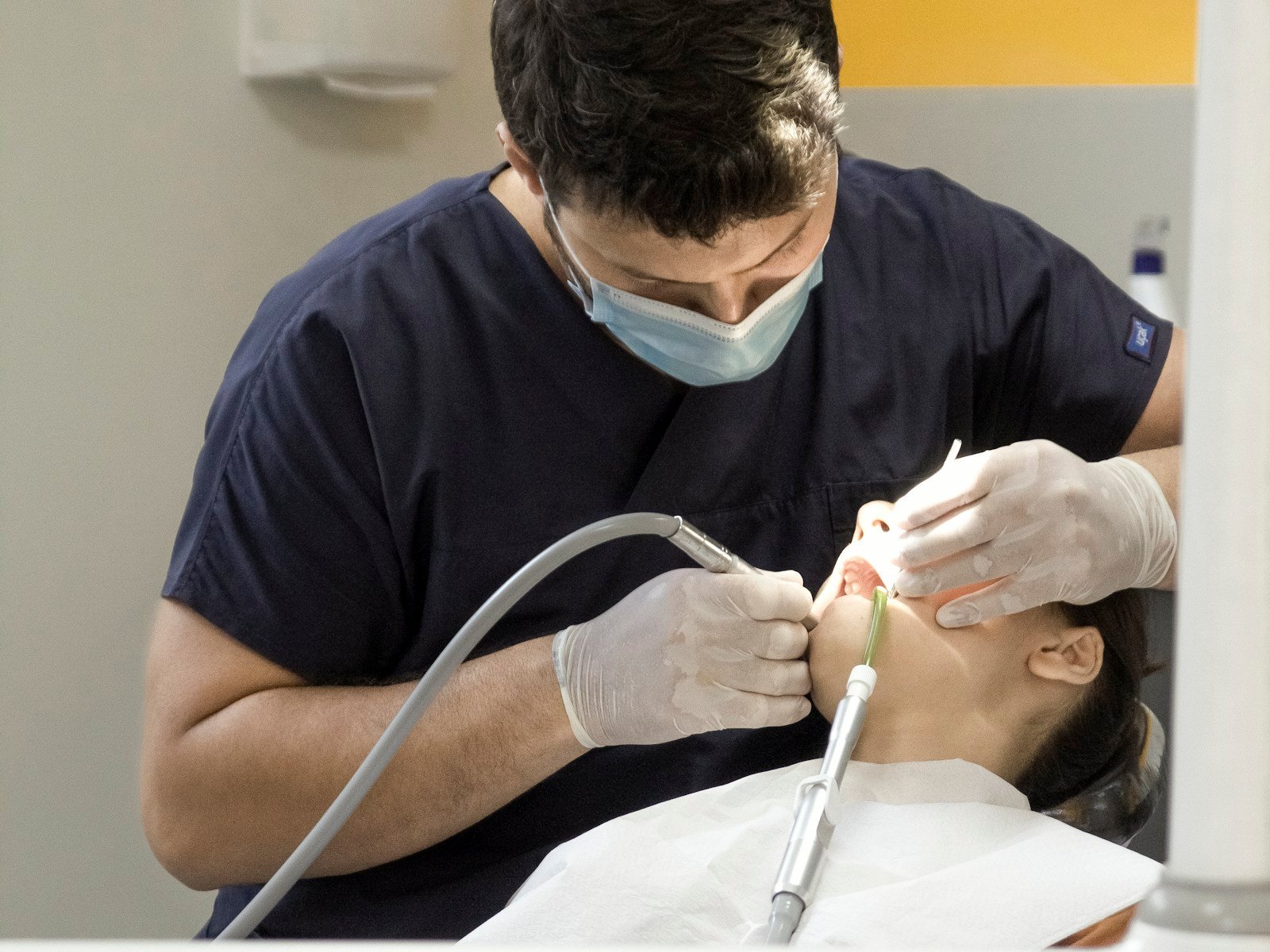
A filling repairs that hole. We take out the soft, decayed part of the tooth. Then we clean the space and fill it with a material that sets hard. The tooth gets its shape and its strength back, and it can be cleaned properly again.
Decay does not heal itself. The outer shell of a tooth is not living tissue like skin, so it cannot grow back over a hole. Once there is a hole, the damage only goes one way. It gets wider and deeper.
Left alone, decay works its way in towards the soft centre of the tooth, where the nerve sits. That is usually when toothache starts. By then a filling may no longer be enough. A filled tooth is a repaired tooth, not a new one, and it needs looking after.
03
Treatment
Is this right for me?
A filling is usually the right answer when decay has made a hole, and there is still plenty of solid tooth around it.
It is likely to suit you if:
Decay has been found at a check-up or on an X-ray
A tooth reacts to sweet, hot or cold things
You can feel a rough edge or a hole with your tongue
An old filling has chipped, worn down or come out
A small piece has broken off a tooth
Food keeps packing into the same spot between two teeth
Not every mark on a tooth needs drilling. Very early decay has not made a hole yet. At that stage it can sometimes be stopped from getting worse, with fluoride, better cleaning between the teeth and less sugar. We would watch it and take X-rays instead of filling it. Watching is a real option and sometimes the better one.
You have a choice of material, and we will talk it through with you. White fillings (composite) are a tooth-coloured resin. They are stuck to the tooth, so we usually need to take away less healthy tooth to hold one in place. They match the colour of the teeth around them.
Silver fillings (amalgam) have been used for well over a hundred years. There is a longer track record behind them in large holes in back teeth, where biting force is heaviest. We will not tell you that one material lasts longer than the other, because that depends on the tooth, the size of the hole and how you bite.
What is changing is how much amalgam UK dentistry uses. It is being phased down because it contains mercury, which is an environmental problem. UK guidance does not ask people to have sound amalgam fillings taken out and replaced.
A filling needs solid tooth around it to hold on to. When too little solid tooth is left, a filling will keep breaking. The repair then has to wrap around the tooth rather than sit inside it. That means an inlay, an onlay or a crown, made in a laboratory and cemented on. It costs more and takes two visits. We would rather tell you that at the start than fit a filling that fails.
If decay has already reached the nerve, a filling will not settle the tooth. That tooth needs root canal treatment or taking out. Some people would rather have a back tooth out than repaired. We will talk you through what that means for the rest of your mouth, and we will not push you towards the more expensive option.
04
Treatment
What happens, step by step
Most fillings are done in a single appointment. A small one takes about twenty minutes. A large one, or two or three done together, can take up to an hour.
At the appointment:
We look at the tooth and often take an X-ray. Decay between two teeth does not show up any other way.
We usually numb the tooth and the gum with a local anaesthetic. A very small filling near the surface can sometimes be done without it. That is your choice.
We take the decay out with a drill and hand instruments. You will hear it, and feel water, pressure and vibration, but not sharpness.
We keep the tooth dry while we work. This matters for a white filling, because the material sticks better to a dry tooth.
We build the filling up in thin layers and set each one hard with a bright light.
We shape it, check how your teeth meet, and polish it.
We will ask you to bite on a thin strip of paper. That marks the spots where the new filling touches the tooth above or below it. If it is fractionally high, we take that bit off. Tell us if the bite feels odd before you leave.
A white filling is set hard by the time you get up from the chair. You can eat as soon as the numbness has gone, which takes two to four hours. Take care with hot drinks, and try not to bite your lip or cheek while it is still numb.
The tooth can be sensitive for a few days afterwards, and for longer after a deep filling. Chewing on the other side for a few days often helps.
05
Treatment
What it costs
Our private prices:
Small or medium white filling: from £150
Large white filling: from £195
Inlay or onlay: from £495
What drives the price is how big the hole is and how many surfaces of the tooth it covers. A small pit on the biting surface takes much less time than a hole running down between two teeth. We give you the figure for your tooth before we start.
Each price covers numbing the tooth, taking out the decay, the filling itself, shaping it and adjusting your bite. The examination that finds the decay is a separate appointment, from £45.
On the NHS, a small white filling costs £23.36 if you pay for your treatment. NHS charges in Scotland are set by the Scottish Government, not by us. They are the same at every NHS practice in Scotland.
Examinations are free for everyone. Around four in ten patients pay nothing for treatment either. That includes everyone under 26, anyone pregnant or within a year of giving birth, and anyone with a certificated exemption. If you do pay, you pay 80% of the cost of each item, up to £384 for a course of treatment.
06
Treatment
What could go wrong
A filling is everyday dentistry, but it is still a repair to a living tooth. You should know what can go wrong before you agree to it.
Sensitivity afterwards. The tooth can be sensitive to cold, or tender to bite on, for a few days. After a deep filling it can last a few weeks. It usually settles on its own, but tell us if it is getting worse rather than better.
It can chip, wear or fall out. A filling takes the same force as the tooth around it, every day. Edges chip, surfaces wear down, and fillings do come out, often while eating something sticky.
Decay can start again at the edge. The join between filling and tooth is where new decay usually begins. Cleaning between your teeth and cutting down sugar does more for that than any choice of material.
A deep filling can irritate the nerve. The closer the decay is to the nerve, the more likely the nerve is already inflamed. Sometimes it settles down. Sometimes it does not, and the tooth then needs root canal treatment or taking out. We cannot tell you in advance which way yours will go.
The bite can be fractionally high. A filling a hair too tall makes the tooth sore to bite on. Come back and we will adjust it. Do not wait for it to wear down.
No filling lasts forever. Every filling needs replacing at some point. Each replacement takes a little more tooth away, so the hole gets bigger each time. That is why a tooth that has been filled and refilled may end up needing an onlay or a crown.
We may find more than the X-ray showed. Decay can be wider or deeper than the image suggested. If it turns out a filling will not hold, we stop and talk to you before we do anything else. You will not be handed a bigger bill without a conversation first.
07
Treatment
Who does this here
Principal dentist
Registered name
Tien-Yu Chang
GDC number
296929
Qualification
Grado en Odontología, University CEU San Pablo, 2021
Qualified in
Spain
Associate dentist
Registered name
Li Yang Yeh
GDC number
306420
Qualification
Grado en Odontología, University CEU San Pablo, 2021
Qualified in
Spain
Associate dentist
GDC number
329275
Qualification
Grado en Odontología, University CEU San Pablo, 2025
Qualified in
Spain
Associate dentist
Registered name
Chen Liu
GDC number
331071
Qualification
Dr Med Dent, Semmelweis University, 2025
Qualified in
Hungary
Associate dentist
Registered name
Cheng-Tsung Hsu
GDC number
320342
Qualification
Grado en Odontología, CEU Cardenal Herrera University, 2024
Qualified in
Spain
08
Useful answers
Questions people ask
01Will having a filling hurt?
Most fillings are done under local anaesthetic, so you should feel pressure, water and vibration, but not sharpness. Tell us straight away if you do feel something sharp, and we will add more anaesthetic.
The injection itself stings for a moment. We can numb the gum first with a gel to take the edge off that. If you are nervous, say so when you book, and we will agree a hand signal so you can stop us at any point.
02How long will a filling last?
Many fillings last years. Some last a very long time and some fail early, and we cannot tell you which yours will be. It depends on how big it is, which tooth it is in, how hard you bite, whether you grind your teeth, and how clean the area is kept.
We check every filling you have at each check-up. Catching a worn edge early usually means a smaller repair than waiting for it to break.
03Can I eat afterwards?
Yes. A white filling is set hard before you leave, so there is no waiting period for the filling itself. Wait until the numbness has worn off before you eat, which takes two to four hours, so you do not bite your lip, cheek or tongue.
If the tooth feels sensitive, chew on the other side for a few days and go easy on very hot and very cold things.
04My filling still hurts. Is something wrong?
Some sensitivity for a few days, or a few weeks after a deep filling, is common and usually settles. If the tooth is sore only when you bite on it, the filling is probably fractionally high. That is a quick adjustment, so call us and come in.
Pain that lingers after something hot or cold, throbs on its own, or wakes you at night is different. That can mean the nerve is inflamed. Ring us rather than waiting it out.
05Can I have a white filling on the NHS?
Sometimes. A small white filling on the NHS costs £23.36 if you pay for your treatment, and nothing if you are exempt. What the NHS covers depends on the tooth and on clinical need, so it is not the same answer for every tooth.
We will tell you what is available to you on the NHS and what the private option costs, before we start, so you can compare the two properly.
06What if I do nothing?
Decay carries on. The hole gets bigger and works its way towards the nerve. What starts as a filling can become root canal treatment, and then an extraction. Each of those steps costs more and takes longer than the one before it.
Decay does not always hurt until it is well advanced, so no pain is not proof that nothing is happening. Watching very early decay is a different thing, and we would tell you plainly if that were the plan for your tooth.
07Should I have my old silver fillings swapped for white ones?
Not if they are sound. Taking out a filling that is doing its job means removing healthy tooth along with it, and the replacement starts its own clock. That is a cost to the tooth for no clinical gain.
If a silver filling is cracked, worn or has decay underneath, we will say so and replace it. If you want the change purely for looks, that is a fair thing to want, and we will tell you honestly what it costs the tooth.
08Will a white filling match my tooth?
We match the shade to the teeth beside it, and in most mouths the result blends in well. An exact match is harder on front teeth, which are rarely one flat colour.
White fillings can pick up staining over the years from tea, coffee, red wine and smoking. We can polish them, but the colour can drift away from your own teeth in time.
09
Treatment
Next step
If a tooth has started reacting to cold or sweet things, or you can feel a hole, book an examination. It starts at £45, and it is the only way to find out how deep the decay has gone.
We will tell you what your tooth needs, what it costs, and what happens if you leave it, before you decide anything.
If a filling has come out or a tooth has broken, call us. We keep appointments free each day for people who need seeing quickly.
Or call us on 01592 348674 if you would rather talk it through first.
Keep exploring
Helpful next pages.
01
Local guideYour local dentist in Glenrothes
02
TreatmentDental implants in Glenrothes & Fife
03
TreatmentUrgent dental care in Glenrothes
Here in Glenrothes
Ready for a clearer next step?
Contact reception about registration, current appointment availability or the right first visit for your concern.
Glenrothes Dental House2 Huntsmans Court
Glenrothes, Fife
KY7 6SX
Glenrothes, Fife
KY7 6SX